THE RECORDS · ENTRY 01 OF 05
The Debut and What It Set
THE RECORDS · ENTRY 01 OF 05
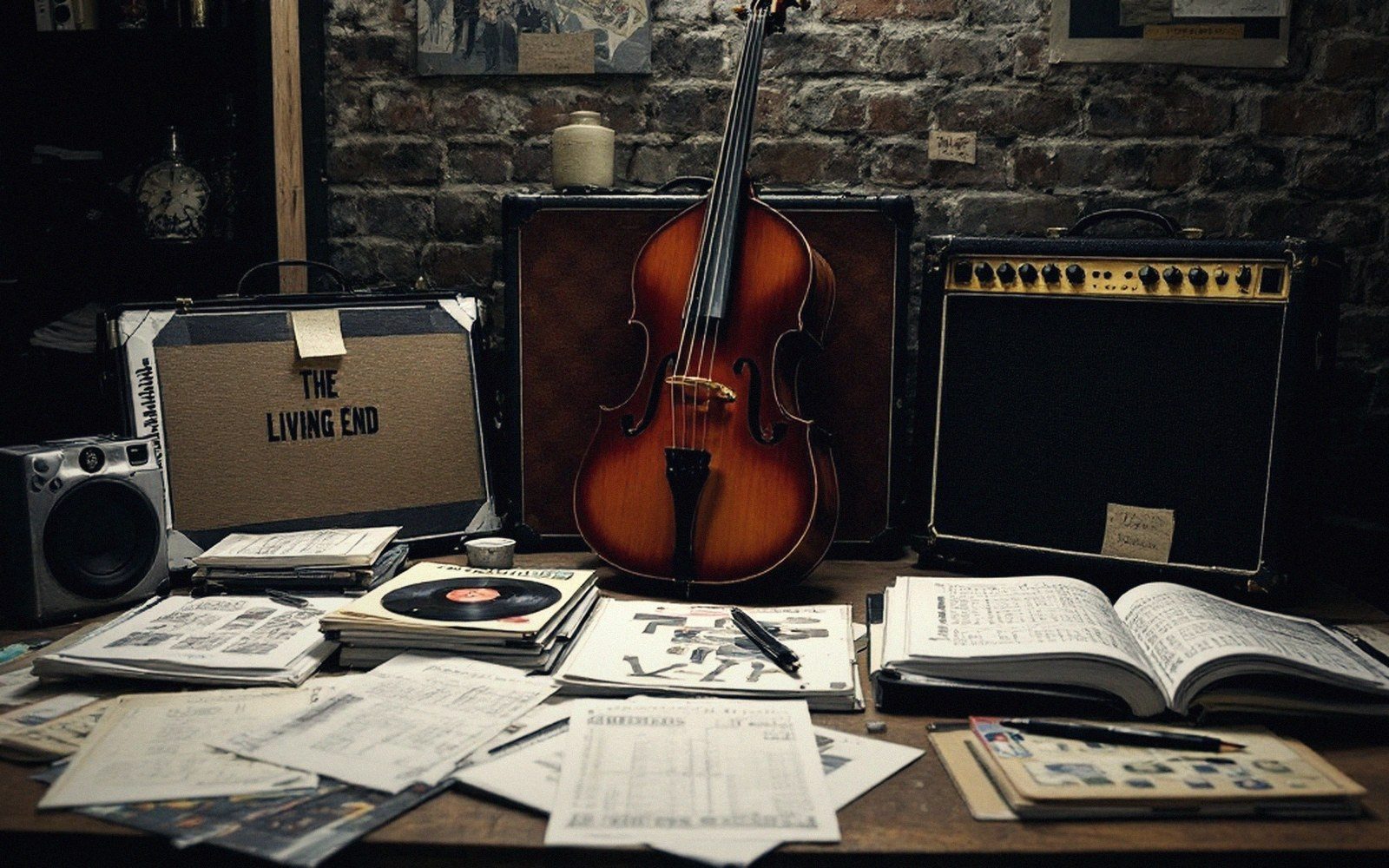
A debut album is always, in part, a manifesto — not a written one, but a structural one. The choices baked into the first record become the coordinates every subsequent record is measured against. The Living End's self-titled album, released in 1998, did exactly this: it arrived already knowing what it was, and that certainty made every later departure legible as a departure.
The band that made it was a three-piece: Chris Cheney on guitar and vocals, Scott Owen on double bass and vocals, and Andy Strachan on drums. That lineup, and the sound it produced, was the argument. Not a transitional phase, not a demo-quality sketch of something more polished to come — a finished, confident statement of method. The question the record poses is simple: what happens when you take rockabilly figures, lock them to punk velocity, and play them with an upright bass that is already doing the rhythmic work of a kick drum?
The answer is that the music becomes simultaneously familiar and wrong in the best possible way. Rockabilly is built on slap bass, treble-heavy guitar, and a certain swinging looseness. Punk is built on compression, aggression, and forward momentum. The Living End took the architecture of the first and ran it at the speed of the second, and what emerged was neither genre cleanly but had the best load-bearing properties of both.
The double bass in this context is not a heritage choice. It is a functional one. Scott Owen's instrument carries the low end that a conventional bass guitar would carry, but it also provides percussion — every slapped note lands as both a pitch and a strike. That means the rhythm section, before the drummer plays a single note, is already generating beat information. The kit does not have to anchor the low frequencies because the bass already does; instead, the drums can push and accent and crack rather than simply hold. The result is a rhythm section that operates at higher density than its headcount suggests.
On the debut, this is not a novelty — it is the sonic infrastructure. The double bass as a punk instrument creates specific problems in a loud room: the instrument feeds back at stage volume, the slap articulation gets swallowed at certain tempos, and the physical demands on the player are severe. The record captures a band that had already worked those problems out on the Melbourne venue circuit, in rooms where none of this was theoretical. The tightness between Owen and Strachan on the album is not studio construction — it is the product of playing the same rooms over and over until the interaction becomes involuntary.
Cheney's guitar is the third element, and in a three-piece configuration it carries an unusual burden: it must provide melody, harmony and the illusion of harmonic depth simultaneously, with nothing underneath it but bass and drums. The hollow-body tone he used — bright, slightly nasal, capable of both clean twang and driven crunch — sits in a frequency range that does not compete with the double bass. There is no crowding in the low-mids. That clarity, that separation between instruments, is one of the reasons the record sounds the way it does: you can hear each element distinctly even when they are playing hard and fast simultaneously.
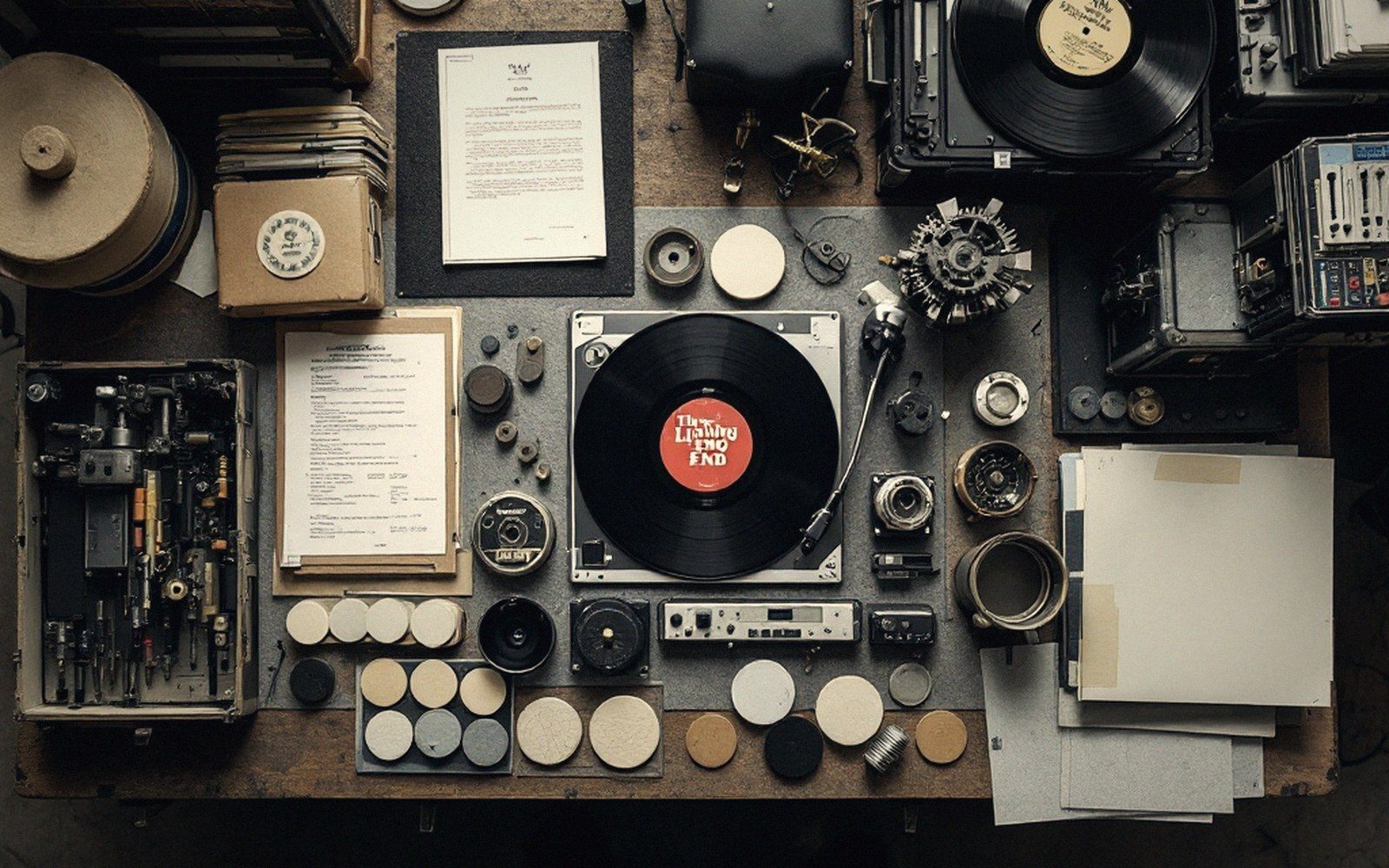
The self-titled album set a baseline so specific that every record after it was obligated to take a position on that baseline. This is not unusual for a debut, but the Living End's first record was unusually coherent — unusually finished — so the pressure it exerted was proportionally greater.
The rockabilly-into-punk lineage the band sits in is not a broad church. The Stray Cats had already demonstrated in the early 1980s that the upright bass could carry a mainstream audience, but they were doing something more stylised and surface-level retro. What the Living End built was rawer and more antagonistic. The EP recordings that preceded the album — the years of singles and short releases before 1998 — showed a band working toward a method rather than having arrived at one. The debut is where arrival happens. The tempos are locked, the arrangements are economical, and the dynamics operate in a narrower range than the later records would permit themselves.
That narrowness is a strength. It is also a constraint that the band visibly chafed against as the catalogue developed. The follow-up records introduced strings, more elaborate arrangements, production that reached for scale. Whether any of them made a fully convincing case for those choices, relative to what the debut had established, is a question this archive treats elsewhere — but the point here is that the question exists because the first record was so clear about what it was.
The specific sonic signatures the debut locked in were: the double-tracked or harmonised vocal on key lines; the guitar break that uses a rockabilly interval pattern at punk tempo; the rhythm section playing behind or on top of the beat in ways that create tension without losing the pulse; and a production clarity that makes the room in the recording audible without being ostentatious. These are not tricks that can be abandoned without consequence. They are load-bearing elements of the identity.
Context matters for understanding why the record sounds the way it does. The Melbourne venue circuit that produced the band is a specific environment: medium-sized pub rooms, loud monitoring, audiences with low patience for arrangements that do not pay off immediately, and a tradition of pub rock endurance that prizes directness over sophistication. A band that spent its formative years in those rooms learns things a studio-first band does not. It learns that the opening sixteen bars either hook the room or lose it, that there is no recovery from a slow start, and that the space between songs is a problem to be solved, not a pause to be enjoyed.
The debut album carries that education audibly. The songs are short, the intros are efficient, and the transitions between sections — verse to chorus, chorus to break — happen faster than the ear quite expects. This is not a record that breathes luxuriantly. It is a record that moves. The Brisbane and Sydney circuit the band also worked through the mid-nineties reinforced the same lessons. What eventually made it onto tape in 1998 was not raw — it was tested.
The Australian context also inflects the lyrical subject matter, though that is better examined elsewhere. What matters here is that the record's compression, its refusal to pad, its instinct for the hook over the atmosphere — these are the gifts of a particular live training. You do not get that record from a band that went straight from rehearsal room to studio.
The debut is the record that set the terms. It did this by being what it was with unusual completeness: a three-piece built on a double bass and rockabilly instincts, playing at punk velocity, in arrangements stripped of everything that did not carry weight. Every subsequent record had to either affirm those terms or argue against them. The argument, across the whole catalogue, has never quite resolved — which is one reason the first album retains the authority it does. It is not just where the band started. It is the fixed point the rest of the work orbits.
An unofficial fan archive. Not affiliated with, endorsed by, or connected to the band, its members, its management or its labels.