THE SOUND · ENTRY 05 OF 05
Recording Three People in a Room
THE SOUND · ENTRY 05 OF 05
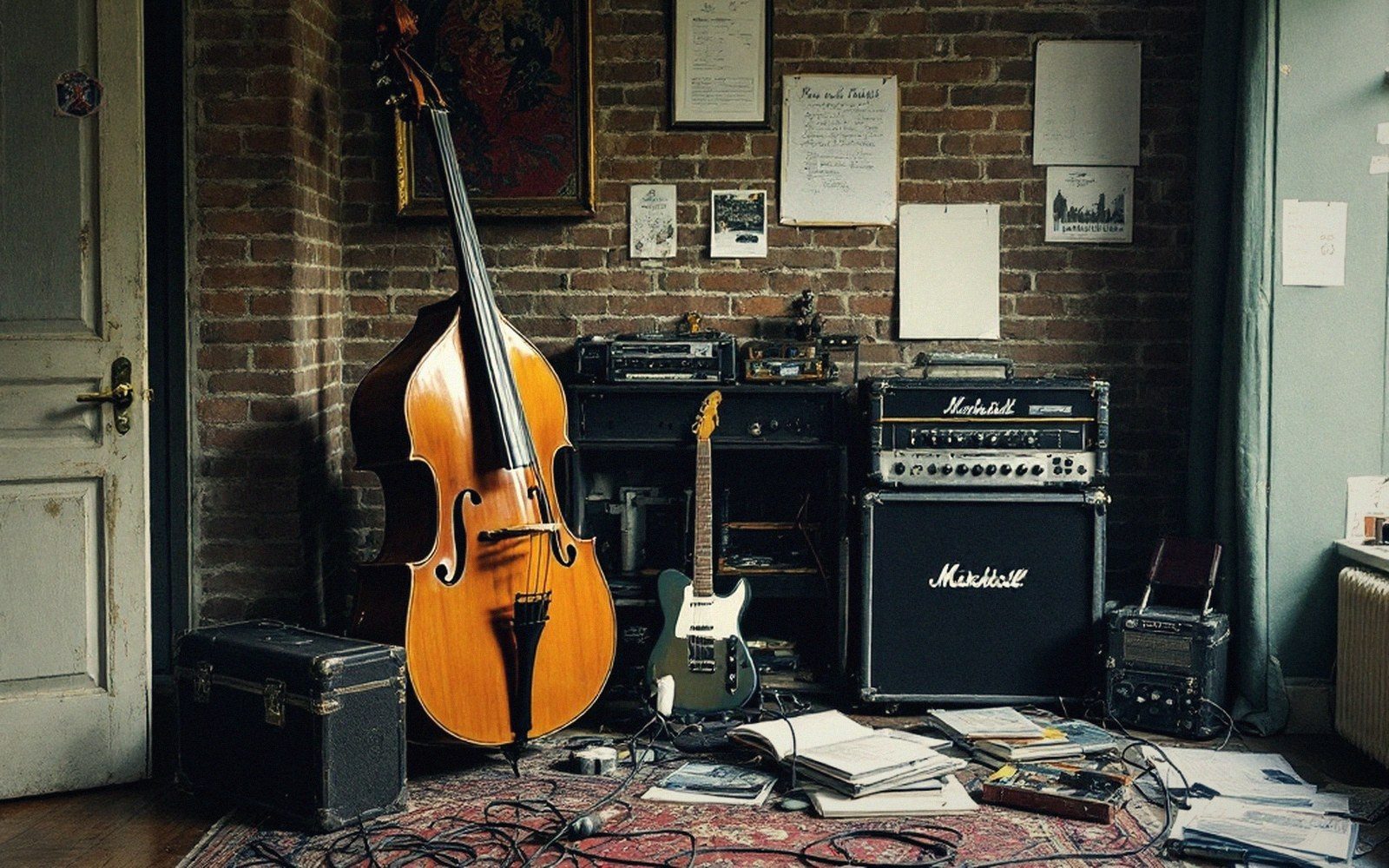
The standard studio logic runs: separate everything, fix it in the mix. It is sensible advice for most bands. For a three-piece with an upright bass it is nearly suicidal, because the thing that makes the ensemble cohere is precisely the acoustic leakage between instruments — the way the kick drum bleeds into the bass mic, the way the slapped strings ghost through the room mics, the way the guitar's low-mid smear fills gaps that are not really gaps. Isolate each element cleanly and you have three separate recordings that no longer remember they were made together.
The upright creates this problem at the source. Unlike a Fender bass, it does not go through a DI box and disappear into a clean signal path. It is a large acoustic body vibrating in a room, and it radiates in every direction simultaneously. Close-mic it — and the typical approach puts something like a small-diaphragm condenser near the bridge, sometimes with a second mic at the lower bout — and you capture the instrument's physical impact. But those mics also catch the drummer two metres away, the guitar amp behind the bassist, the ambience of the live room itself. That is not a problem to solve. That is the instrument.
The decision that defines how the record sounds is not which microphone you use — it is how far apart the musicians stand and whether the control room door is open. Closer together means more bleed, more of the room in every channel, a sound that sits together in three dimensions rather than being assembled horizontally on a console. Further apart, with gobos between them, means tighter separation and more editorial control in the mix. Every studio session for a band in this lineage is a negotiation between those two poles.
The phase relationship between the upright's mic and the kick drum matters in a way most rock recording does not have to think about. Because both instruments are occupying the same low-frequency space in the same room, the distance between them translates directly to phase displacement at the frequencies where the two instruments overlap — around 80 to 120 Hz, roughly. Track the upright and the kick at two metres apart with both mics open and you may get reinforcement; at slightly different distances you may get cancellation. Engineers working with upright basses in live studio environments learn to check the mono sum of kick and bass before anything else, because that is where the bottom of the record lives.
The records in this catalogue that sound like a room — that carry the sense of musicians responding to each other in real time — are the ones where some version of this risk was accepted. The debut has that quality: there is graininess and physical proximity in the low end that suggests the tracking was done with the band together and not much fixed afterwards. Later productions, aiming for a cleaner and more commercially legible sound, traded some of that grain for definition. Whether that trade improved the records is a legitimate argument. What it unambiguously changed was the sense of spatial truth — the feeling that you are hearing a room, not a reconstruction of one.
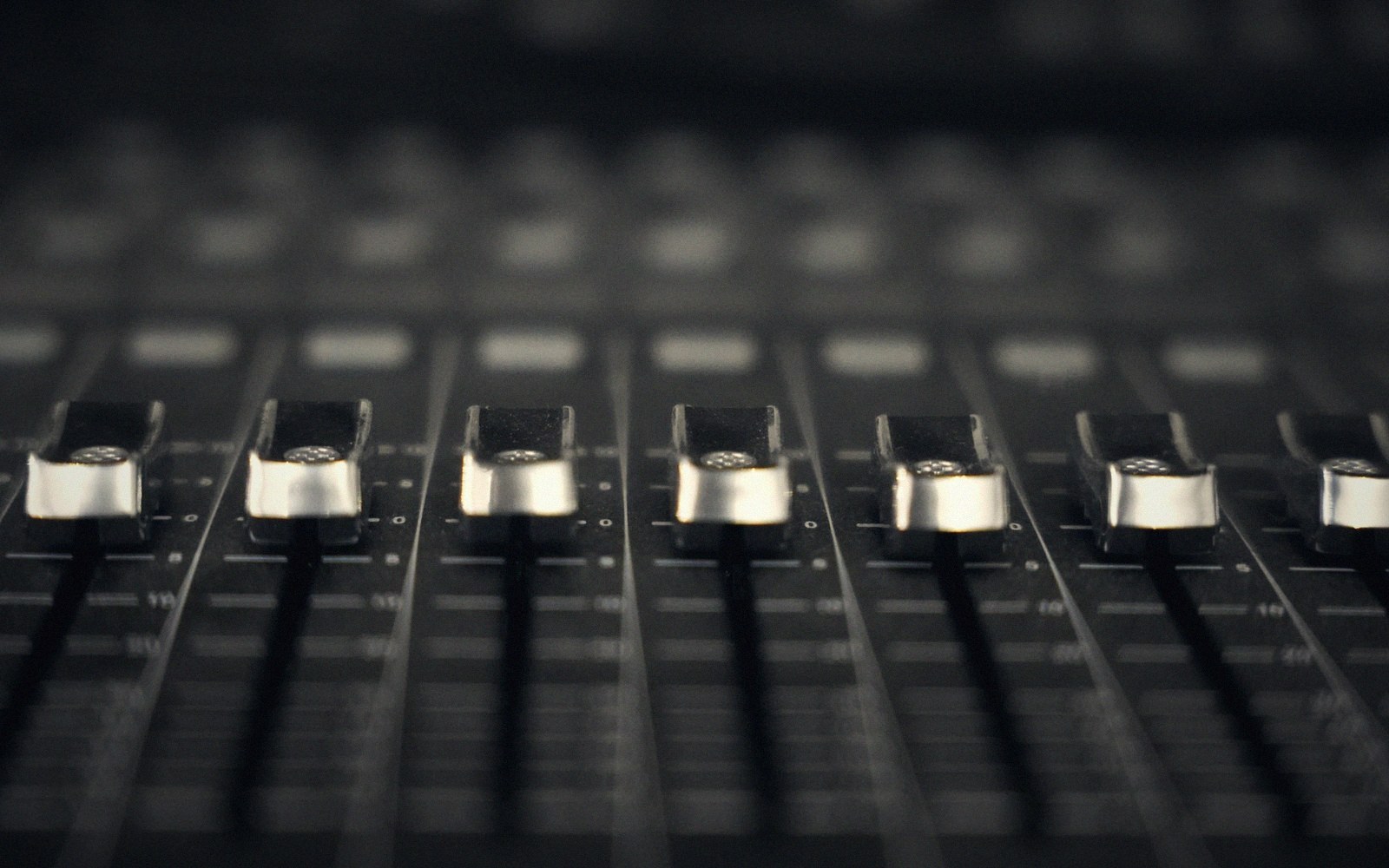
Overdubbing is not a complete remedy for a live session that went wrong, but it is also not neutral when applied to an upright-based three-piece. The bass part is not just harmonic information; it is rhythmic and timbral information that the drum performance leans against. Record them separately and the drummer has nothing physical to respond to — the timing relationship changes, subtly but audibly. The records that hold up as records rather than as collections of well-recorded parts are the ones where somebody decided, at the session, that bleed was the point, not the cost.