WHERE IT CAME FROM · ENTRY 03 OF 05
The Pub Rock Inheritance
WHERE IT CAME FROM · ENTRY 03 OF 05
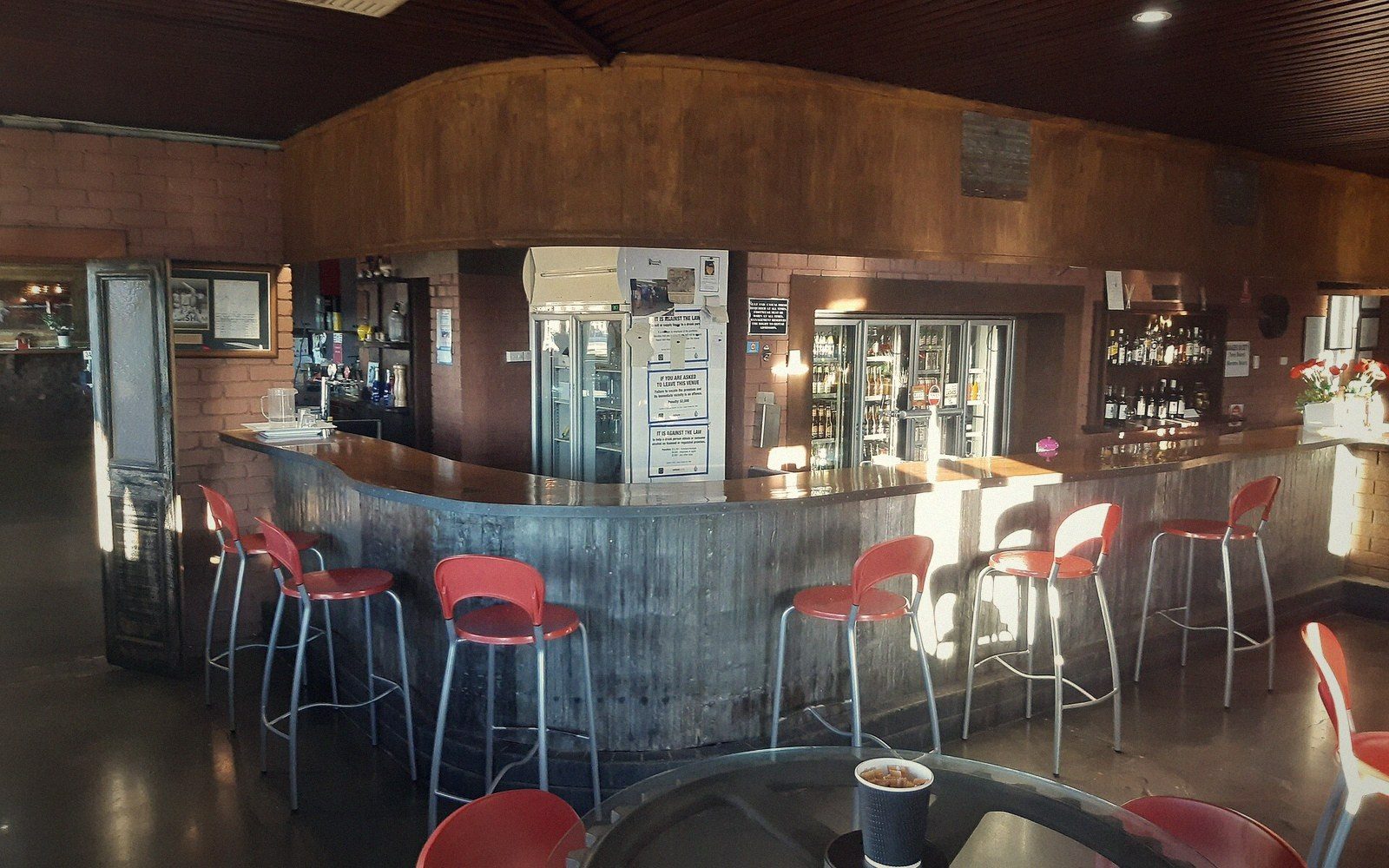
The Australian pub band room of the 1970s and 1980s was not designed with music in mind. It was designed around a liquor licence. The stage was a raised platform at one end of a room built to hold a bar, a pokie machine rank, and a crowd of people who were primarily there to drink. The PA had to reach the back wall over conversation. The room rewarded volume not as an aesthetic choice but as a functional one — if you could not be heard over the ambient noise of two hundred people at the bar, you were not working.
That pressure produced a particular kind of musician. Australian pub rock in its classic period — roughly from the early 1970s through the 1990s, with bands like Cold Chisel, The Angels and Rose Tattoo defining its grammar — was not music made for listeners sitting still. It was made for a room in motion, and the skills it demanded were endurance, projection and instinctive crowd management. A band that could not hold a pub room for four sets across a Friday and Saturday night was not going to last. The attrition was real and it was useful.
The double bass enters this lineage at an oblique angle. The classic pub rock bands ran electric bass, loud guitar and a kick drum you could feel in your chest. What The Living End brought into those rooms was a different sound — rockabilly and psychobilly vocabulary deployed in a setting built by pub rock — but the rooms themselves imposed identical constraints. Volume tolerance, stamina, reading the crowd, knowing when to push and when to pull back: these are not genre-specific skills. They are skills the room teaches, and the room does not care what instrument you carry in.
The acoustic logic of a pub band room is specific. The ceiling is low, the surfaces are hard — tile, plasterboard, glass — and there is almost no soft furnishing to absorb mid and high frequencies. This means the room has a natural compression effect: turn up past a certain point and you stop gaining headroom, you start gaining mud. The bands that came through the pub system learned to mix on their feet because there was no alternative. A sound engineer was often absent or marginal; the band balanced itself.
For a three-piece, that education is especially demanding. With no fourth player filling the midrange, every frequency gap is exposed. The Living End's particular configuration — guitar, upright bass, drums — left the bass carrying responsibilities that an electric bass in a four-piece would split with a rhythm guitarist. The upright, slapped hard, delivered low-end impact and high-frequency click simultaneously. It punched through ambient noise in a way that made sense in exactly the environments pub rock had built. The instrument's percussive physics were calibrated, almost accidentally, to what the room needed.
The endurance requirement of the pub circuit is worth taking seriously as a production condition. Playing long nights on consecutive weekends for a room that could turn hostile if you lost their attention is not the same as playing a forty-minute festival set to a crowd that has already committed. The pub crowd was paying for their beer, not for you; you had to earn their attention repeatedly across the night. Bands that came through this system developed a particular grip on tempo and energy management — they knew how to build a set, when to kick the pace and when a slow song would give the room a place to breathe rather than an excuse to stop watching.
The tonal qualities associated with Australian pub rock — the forward-placed midrange, the dry and punchy low end, the guitar that cuts rather than washes — are not arbitrary. They are responses to the room's acoustic physics, arrived at empirically over years of trial in front of live audiences. A sound that works in a carpeted rehearsal room or a recording studio does not necessarily work in a pub band room with three hundred people in it. The bands that built Australian rock did their R&D in those rooms, and the lesson ran consistently: be direct, be physical, do not obscure the beat.
The Living End's early sound carries those marks clearly. The distorted guitar cuts through without padding out the frequency range; the bass slap lands like a rim shot; Andy Strachan's kit is placed to sit in the rhythm rather than to occupy space. That is pub room logic applied to a rockabilly-punk hybrid, and it makes the band legible in rooms it was actually played in — the same band rooms of Melbourne's venue circuit that had been running live music through the pub system for decades. These were not heritage venues being repurposed; they were functional rooms with the same hard surfaces and the same basic acoustic problem.
What the pub system also produced was a shared understanding of dynamics that gets undervalued when people discuss the band's sound. The ability to bring a room down and then explode it back is a crowd management technique before it is an arrangement technique. You learn it by losing a room and then winning it back, which is something that happens in pubs and does not happen in rehearsal. The quieter moments on the records — and there are more of them than a casual listening suggests — carry that knowledge. They are not there because the band was following a textbook on arrangement; they are there because players who have been through pub-style circuit training have internalized the rhythm of a crowd.
The transmission was not direct or sentimental. No one sat young Melbourne bands down and told them to study Cold Chisel. What actually happened was structural: the venues remained, the circuits remained, and the conditions that had shaped bands a generation earlier simply persisted because the economics of live music in Australian cities changed slowly. A band coming up through small Melbourne rooms in the mid-1990s was encountering approximately the same educational machine that had produced Australian pub rock — the same hard rooms, the same licensing hours, the same need to hold an inattentive audience.
The rockabilly lineage The Living End was working in brought its own technical vocabulary. The slap technique, the upright bass's acoustic signature, the specific rhythmic structures borrowed from 1950s American music — none of that came from pub rock. But the deployment of those elements in a live context, the decision about how loud and how hard and when to break, the instinct for what a physical room requires: that was pub rock's inheritance, absorbed through the circuit rather than through study.
There is also the question of attitude, which is harder to locate but real. Australian pub rock operated with a particular relationship to its audience — earned authority rather than assumed authority, a kind of democratic bluntness about what the room was and what you had to do to own it. The Living End's stage presence, on the evidence of recordings and reports of their early shows, sits in that tradition: high energy, physically committed, technically specific but never precious. The double bass on its end pin, tilted forward, played standing up — that is not a polite instrument held at a careful distance. It is an object you wrestle, in a room built for noise.
The pub band room as a training system produced hard skills: volume discipline, tempo stamina, crowd reading, mix-on-your-feet pragmatism. It produced soft skills too: a comfort with difficulty, an understanding that a room can be hostile and that hostility is something you play through. Those are not qualities that show up on a recording credit. They are qualities that determine whether a recording has conviction, and whether a band built on an unusual instrumental combination can make that combination feel inevitable rather than gimmicky in a live room.
The Living End played those rooms. The rooms left their mark.
An unofficial fan archive. Not affiliated with, endorsed by, or connected to the band, its members, its management or its labels.